
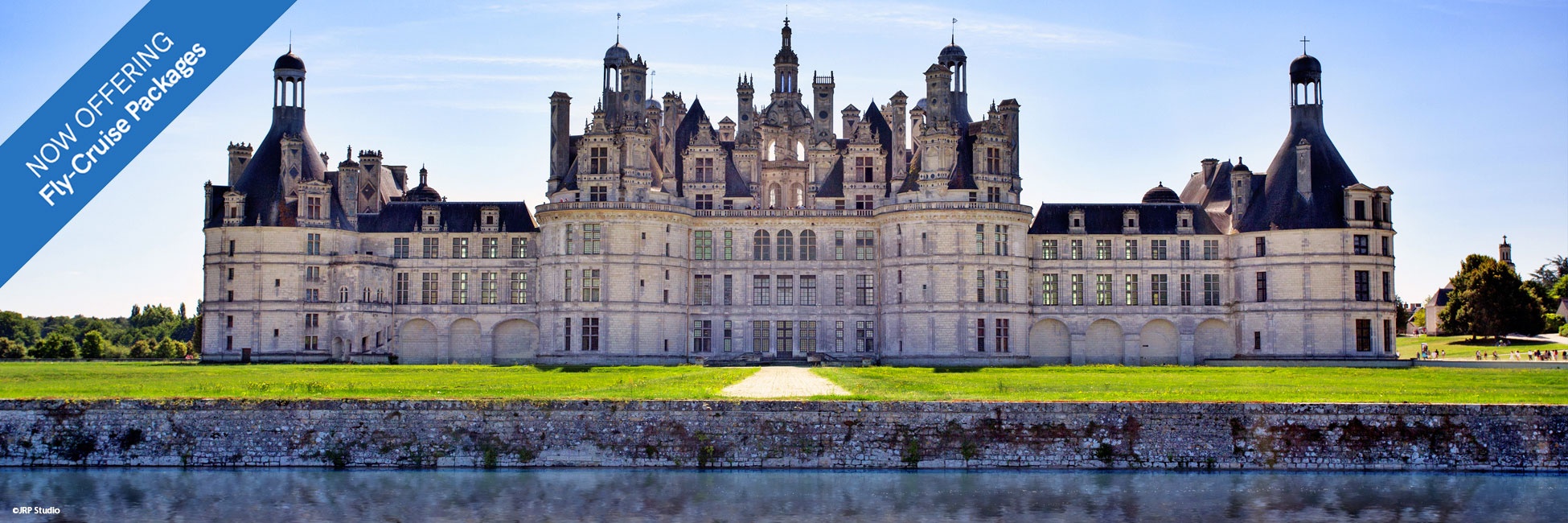
The Loire, river of the Kings of France
A unique river of its kind, called "last wild river of Europe". The Loire Valley has been a UNESCO World Heritage Site since 2000.The Loire, the river’s history
The beauty of the landscapes of the Loire are legendary. Here and there a castle, a fortress or an abbey and, in the distance, the forest bordering the picture.
The Loire particularly inspired the famous English water-colourist William Turner called the "painter of light". Joachim Du Bellay, a French poet of local descent, praised the Angevin sweetness.
After him, Jean de la Fontaine, Beaudelaire, Victor Hugo, and many other romantic souls dipped their pen in the vaporous atmosphere of the Loire Valley which became, in the Renaissance, the place of residence of the Kings of France. Their castles, veritable jewels encrusted in dream scenery, enjoy an international reputation. Chambord, Villandry, Azay-le-Rideau, Amboise, Ussé ... The "Royal River” – The Loire.
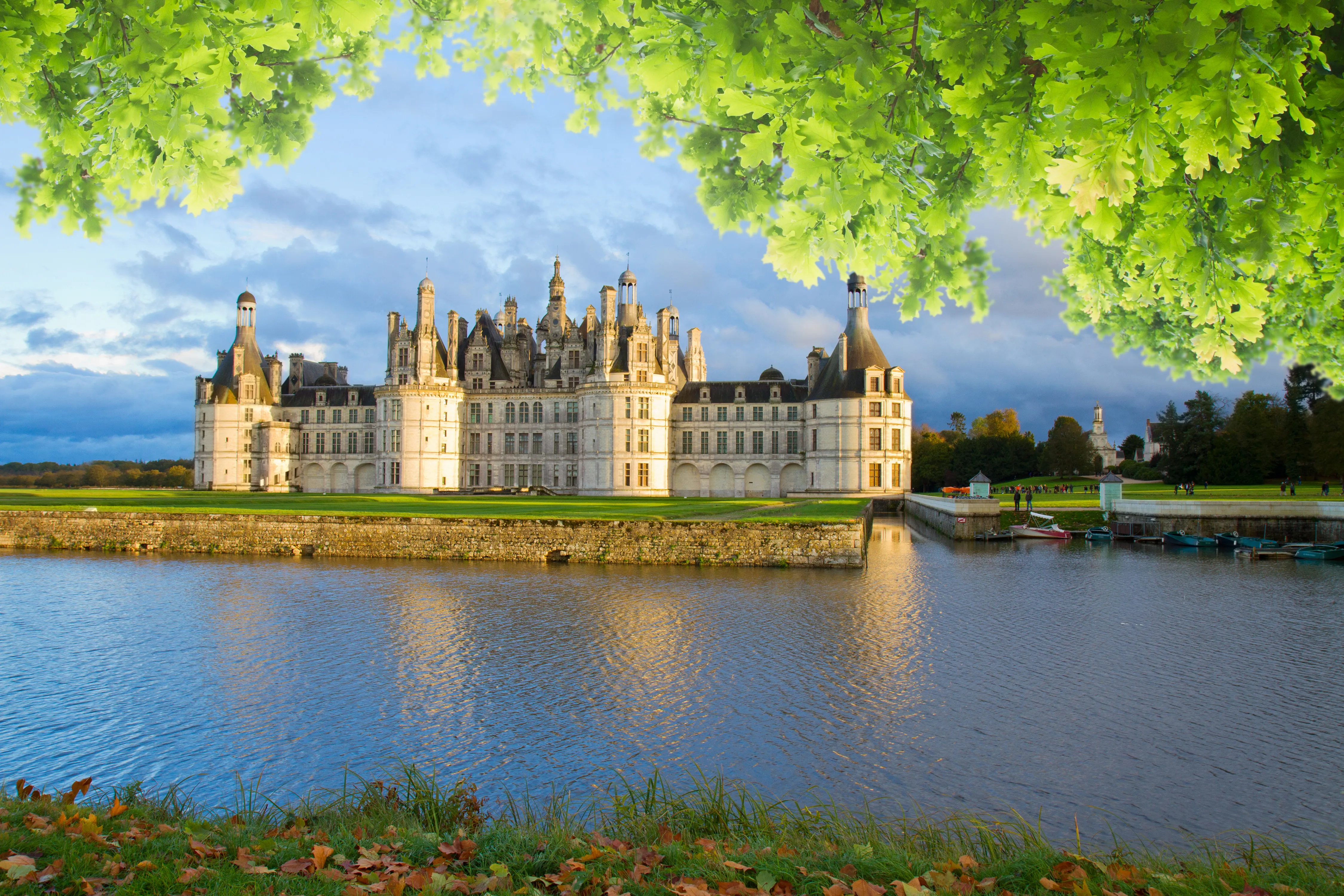
The delights of the "Garden of France"
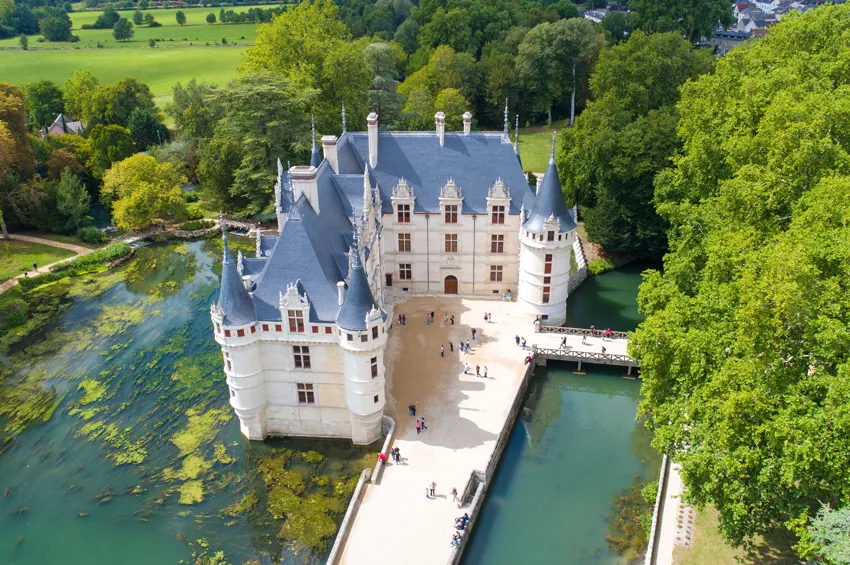
The Loire Valley tells the story of a unique river of its kind. The only river in Western Europe that has never been canalised, which is why it is called "the last wild river in Europe". It follows its course over 1,006 km, majestic, intractable, subject to floods, sandbanks that make its draft variable, from Mount Gerbier-de-Jonc in the Ardèche, to the Atlantic Ocean.
Navigable over 700 km until the eighteenth century, the Loire is today officially, only navigable between its mouth at Saint-Nazaire to Bouchemaine near Angers.
It is this river, free in a way, that has shaped the enchanting scenery of the Loire Valley.
The Loire Valley was beautifully nicknamed "Garden of France" by the nobles of the fifteenth and sixteenth centuries. It is full of gardens, orchards, vineyards that produce wines of great diversity. From Sancerre, Touraine, Anjou, Saumur ... They accompany a refined gastronomy which gives pride of place to its fish caught in abundance and the meats coming from the regional agriculture, without forgetting the cheeses.
Rabelais, child of "The country”, father of Gargantua and Pantagruel, must have feasted, literally and figuratively, on these favourite lands of aristocrats as mariners, farmers, and simple townspeople.
An economic and cultural explosion
Until the nineteenth century the Loire remained the most important means of communication for the transit of goods. The opening of the Briare canal in 1642 and of Orléans in 1692 brought the Loire and Seine together.
From the heights of Saint-Rambert, 80 kms of road barely separated it from the Rhone which opens the way to the Mediterranean.
The Loire Valley also experienced a cultural explosion that began at XVIth century. Printing took off directly from intellectual emulation. It was in Angers where the colossal fortress of King René was erected, that the first printing company opened in 1477.
Finally, the kings Charles VIII, Louis XII and Francis I, who discovered Italy, launched the great French Renaissance.
It is the nobility who launched here "the art of living the French way". The Loire Valley was inscribed in 2000 as a UNESCO World Heritage Site under the heading of Living Cultural Landscapes. "Remarkable for its monumental heritage of international renown and for the quality of its urban sites.”
This landscape testifies to harmonious development between man and his environment over two thousand years of history.

The prestigious marine Loire

The Loire, cradle of river navigation, also tells the story of the marine industry with Saint-Nazaire as its figurehead. At the "terminus" of the Loire, just after Nantes, one of the largest shipyards in Europe perpetuates a world-renowned know-how of ship building. It is the pride of a long line of sailors who have the memory of those beautiful days of navigation.
Until the nineteenth century, thousands of sailing boats were used to transport passengers and various goods. But the arrival of the extended railway from Orleans to Tours in 1846 and six years later to Nantes, plunged more than 6000 sailors into unemployment as the Loire marine was sacrificed to modernity. The last steamboats with their characteristic profile disappeared from the landscape at the dawn of the twentieth century.
What remained is the timeless spectacle of the boatmen who always circulate aboard barges and “futreaux”: flat-bottomed boats. These are used uniquely on the Loire for utilitarian purposes and form an integral part of life on the river.
And now, 100 years after the last steamboats, in 2015, a new cabin tourism ship discovers this exceptional environment, respectful to these capricious waters.
A new generation paddle steamer, the MS Loire Princesse, model of modern technology, unique in the world, now pays tribute to the naval industry engraved in the history of the Loire. A renaissance, in a way, of the high-level sailing tradition is now available for tourists enamoured by the beauty and French “art de vivre” way of living. An idea fulfilled by CroisiEurope.

Stop in NANTES -SAINT-NAZAIRE(2) - NANTES - ANCENIS(3) - The Châteaux of the Loire Valley - CHALONNES-SUR-LOIRE(4) - Angers - NANTES
Join us for a magical cruise along the Loire for an unforgettable New Year's Eve! Discover the many Chateaux of the Loire, Nantes and its historical treasures, or Saint-Nazaire (5) where you can admire the shipyard where the Queen Mary II ship was built.
See cruise details
Stop in NANTES - SAINT-NAZAIRE(3) - ANCENIS(2) - The Châteaux of the Loire Valley - ANCENIS(2) - NANTES
Embark on a cruise on the Royal Loire River whose beauty is legendary. Visit Nantes and The Machines of the Isle of Nantes, a gallery that recreates the imaginary world of the famous writer Jules Verne. Discover Saint-Nazaire and admire its shipyard (4) and the Escal'Atlantic which immerses you in the world of steamships from the beginnings of their gigantic construction to life on board. Soak up the magical castles of the Loire.
See cruise details
Stop in NANTES – SAINT-NAZAIRE – NANTES – Langeais Castle and Fontevraud Abbey – ANCENIS – NANTES
Join us for a cultural interlude and uncover the most beautiful hidden treasures of the Loire’s heritage. Enjoy this off-the-beaten-path cruise to experience the grandeur of a region enriched by its history, local culture, and gastronomy. From educational visits to breathtaking artistic landmarks, to temples of knowledge within eclectic museums, and local history brought to life through tales and regional folklore, set out to explore a region that never ceases to surprise and enchant.
See cruise details
Stop in NANTES - SAINT-NAZAIRE - NANTES - Langeais Castle and Fontevraud Abbey - ANCENIS - NANTES
Join us for a cultural getaway and discover some of the Loire’s most treasured hidden gems. Enjoy this off-the-beaten-path cruise and experience the grandeur of a region renowned for its rich history, vibrant local culture, and outstanding gastronomy. From inspiring visits to breathtaking artistic venues and fascinating museums that serve as true temples of knowledge, to captivating local stories brought to life through regional tales and folklore, embark on a journey through a region that never ceases to surprise and enchant. Explore the heart of the Loire and uncover its unique heritage, legends, and traditions at every turn.
See cruise details
Stop in Nantes - Vannes - Quiberon - Carnac - Auray - Vannes - NANTES - SAINT-NAZAIRE(6) - NANTES - ANCENIS - CHALONNES-SUR-LOIRE(7) - The Châteaux of the Loire Valley - ANCENIS - NANTES
Begin your vacation with an exclusive three-day trip through Brittany, a proud French region with a more-than-thousand-year-old heritage that has spread its influence across the area. From the prehistoric megaliths in Carnac to the wave-beaten coasts of the Quiberon Peninsula, set off on a journey through a stunning region shaped by humans and nature alike. Top off your Breton experience with breakfast in a local crêperie and a visit to Auray, a charming village on the Gulf of Morbihan. Then climb aboard for a cruise on the Loire, the royal river with legendary scenery.
See cruise details